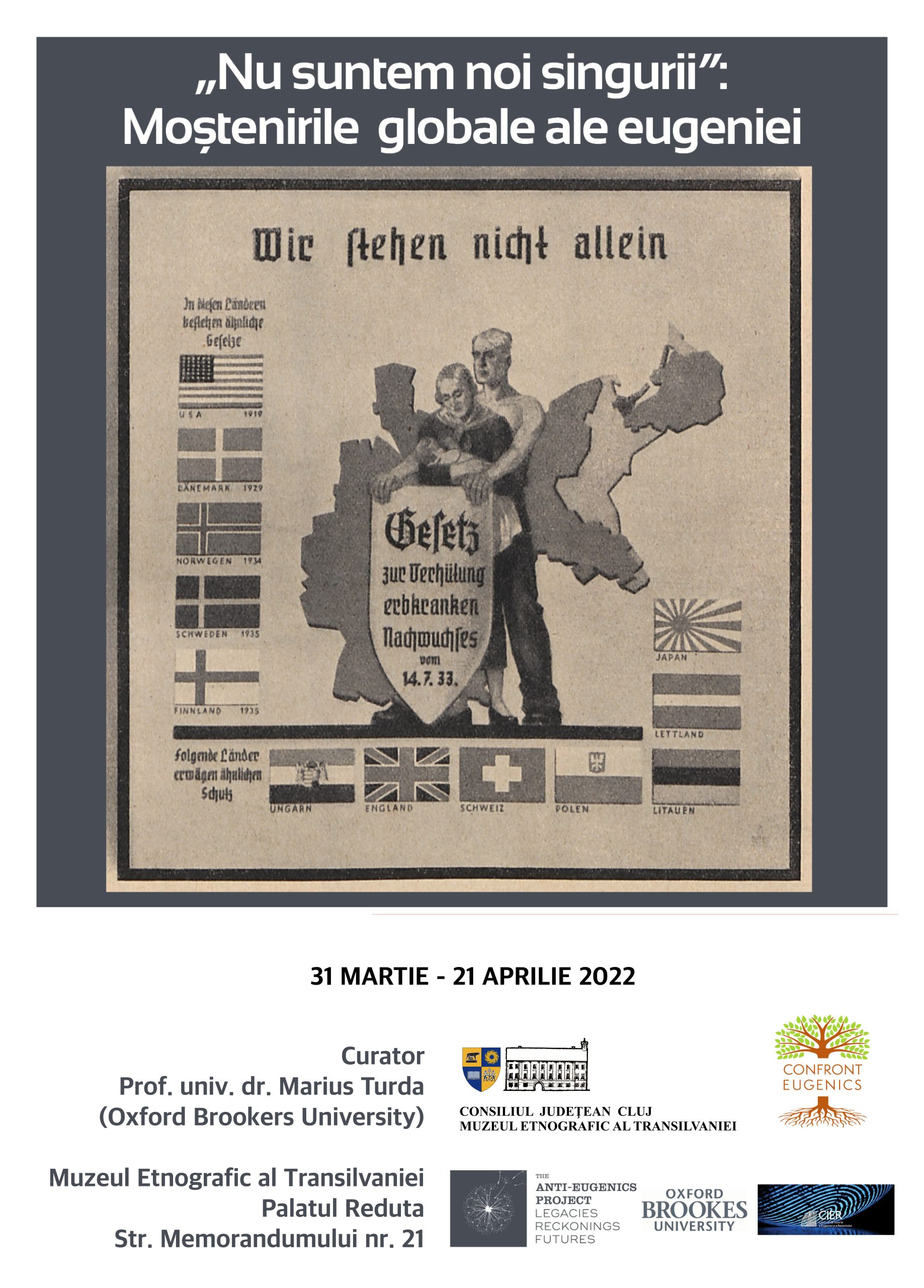
After Warsaw, the exhibition “We are not Alone”: Legacies of Eugenics travels to Stockholm. The exhibition is open during a major conference on Romani studies hosted by Södertörn University between 18-20 May 2022.
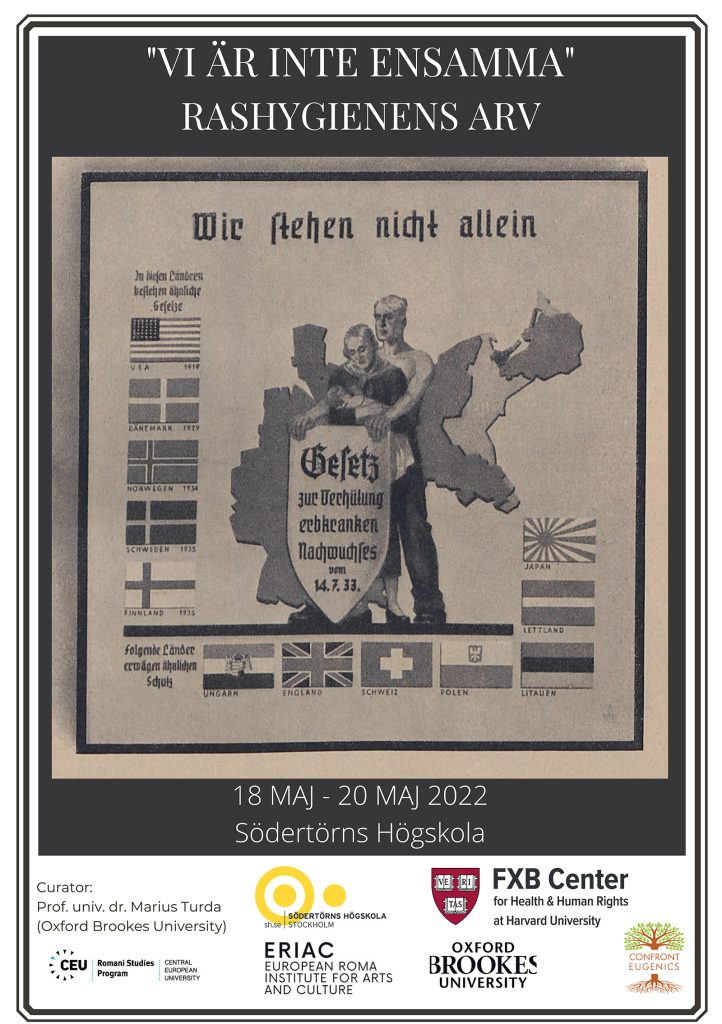
“We are not alone” travels to Warsaw
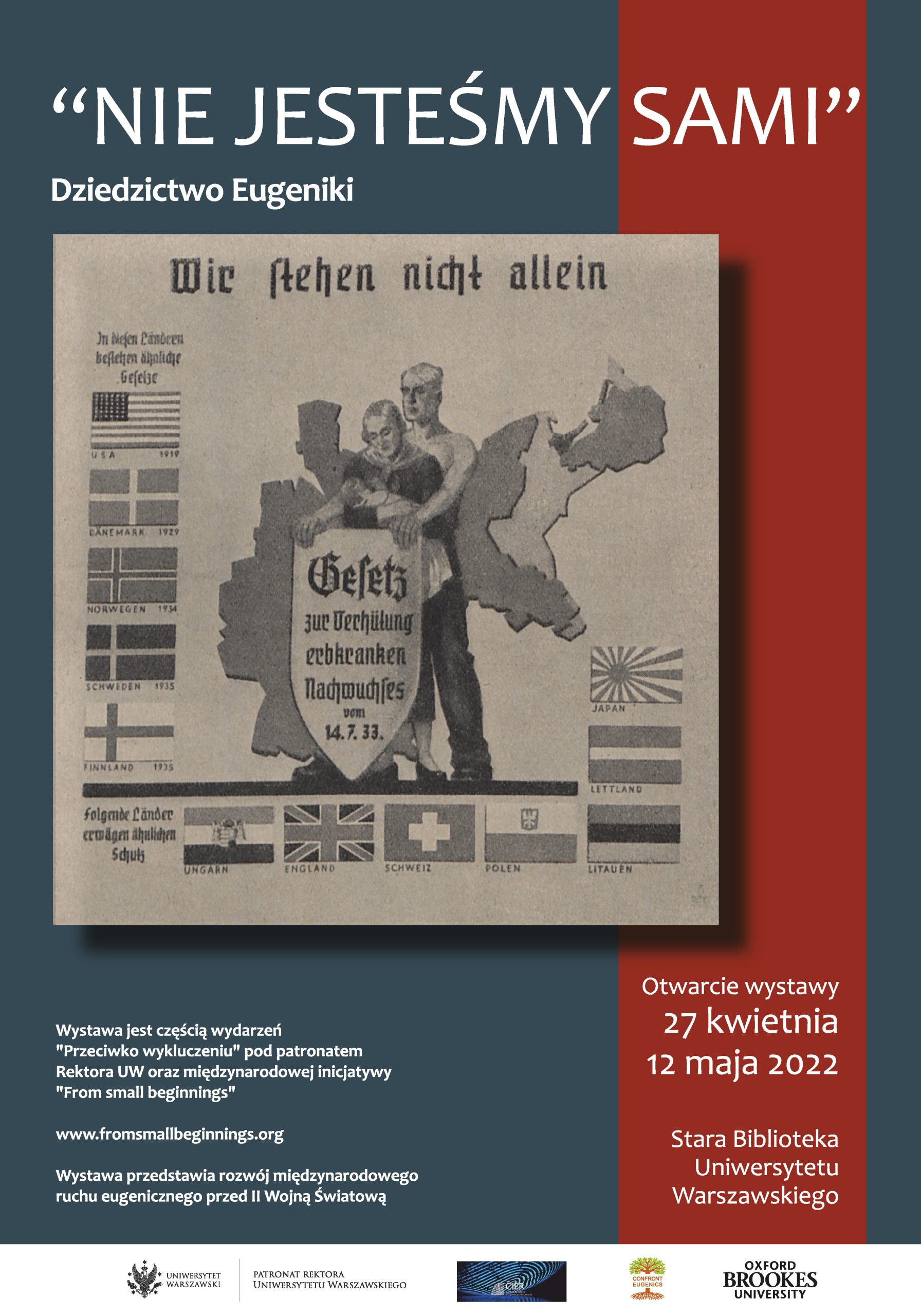
On 27 April 2022 the exhibition “We are not alone”: Legacies of Eugenics travels to Poland at the Museum of the University of Warsaw.
Marius Turda’s discussion with Teresa Norman
Listen to Marius Turda discuss with Teresa Norman (Together in the UK) about racism, eugenics, and prejudice:
https://togetherintheuk.co.uk/project/war-oppression-and-prejudice-part-1/
and
https://togetherintheuk.co.uk/project/war-oppression-and-prejudice-part-2/
Marius Turda interviewed on Romanian National Television
Marius Turda interviewed on Romanian National Television about the aims of the ‘We are not alone’ exhibition, the current resurgence of racism and the need to confront the legacies of eugenics:
and
and
Protejarea rasei si mostenirea eugeniei
Read Marius Turda’s latest article, dealing with eugenics and anti-Roma racism (in Romanian):
https://www.dor.ro/protejarea-rasei-si-mostenirea-eugeniei/
Published 14 February 2022
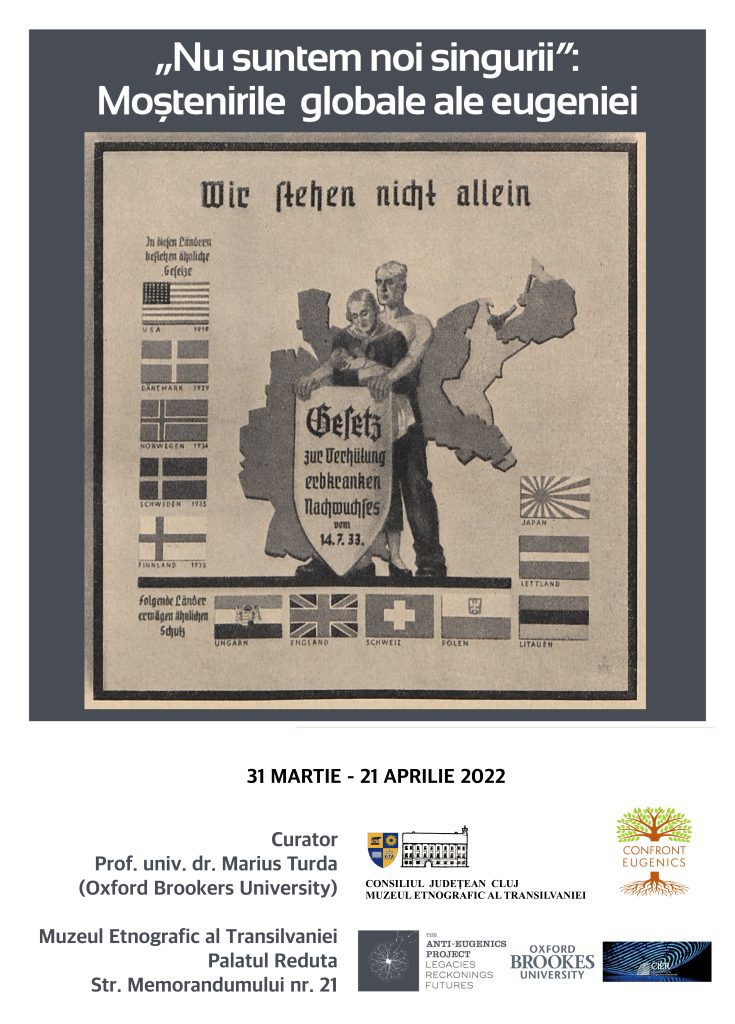
‘We are not alone’ travels to Cluj
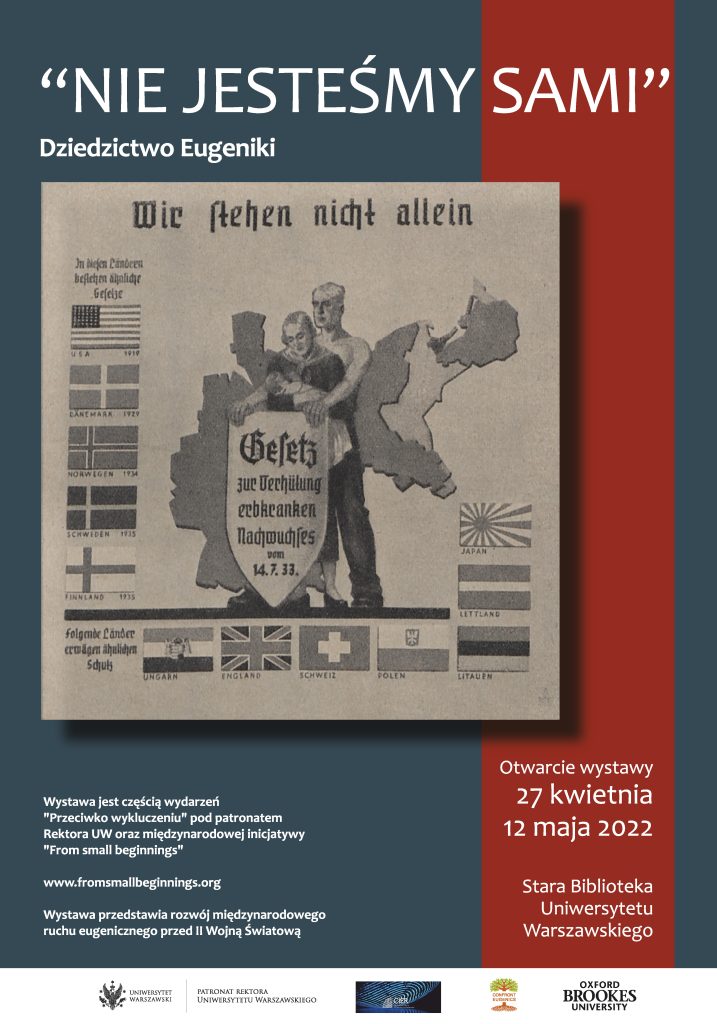
On 31 March 2022 the exhibition “We are not aloneâ€: Legacies of Eugenics travels to Cluj at the Transylvanian Museum of Ethnography
https://www.muzeul-etnografic.ro/en
Unearthing the roots of eugenics
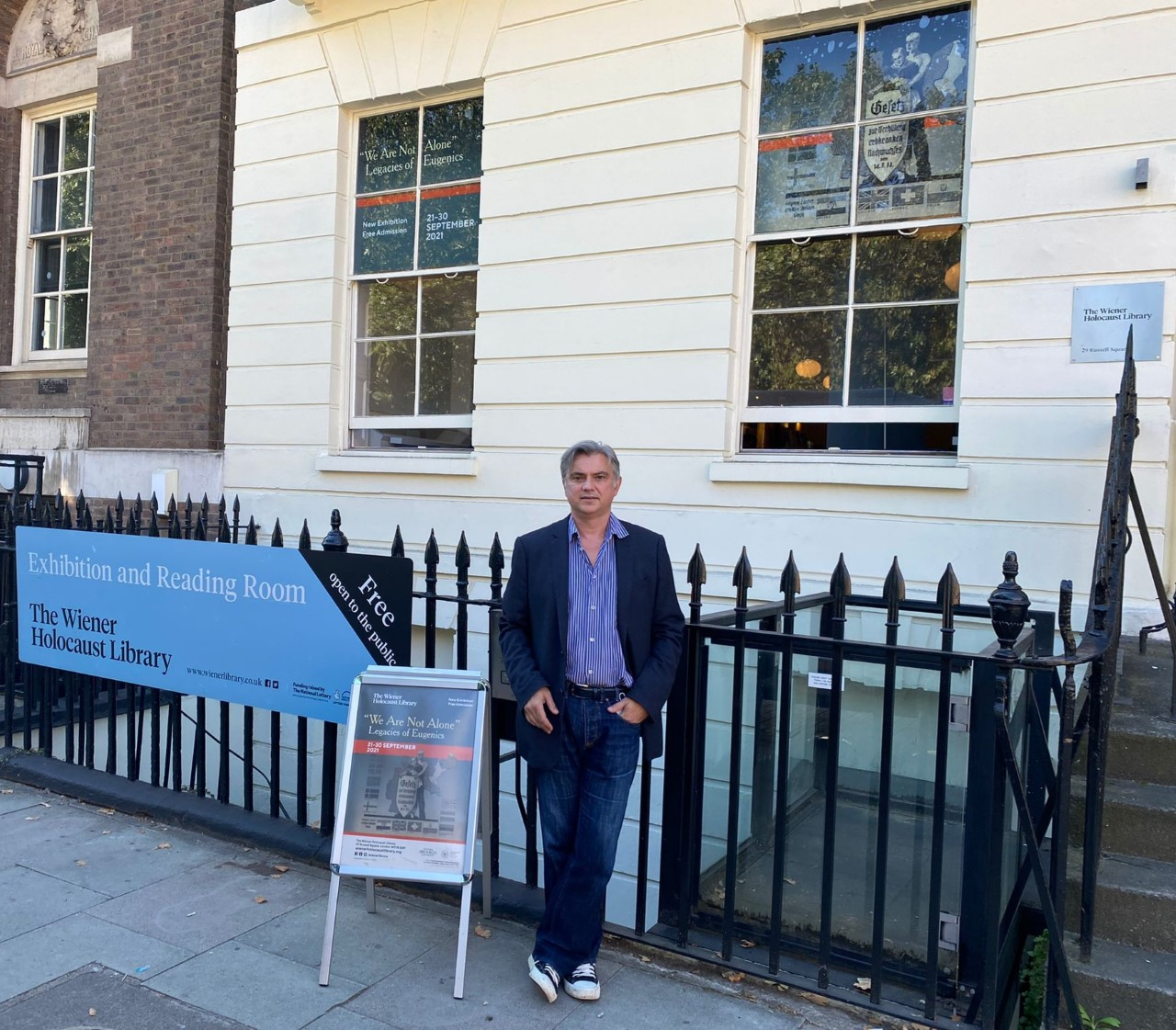
Join Marius at the Royal Institute for a lecture to mark the anti-centennial of the Second International Eugenics Congress.
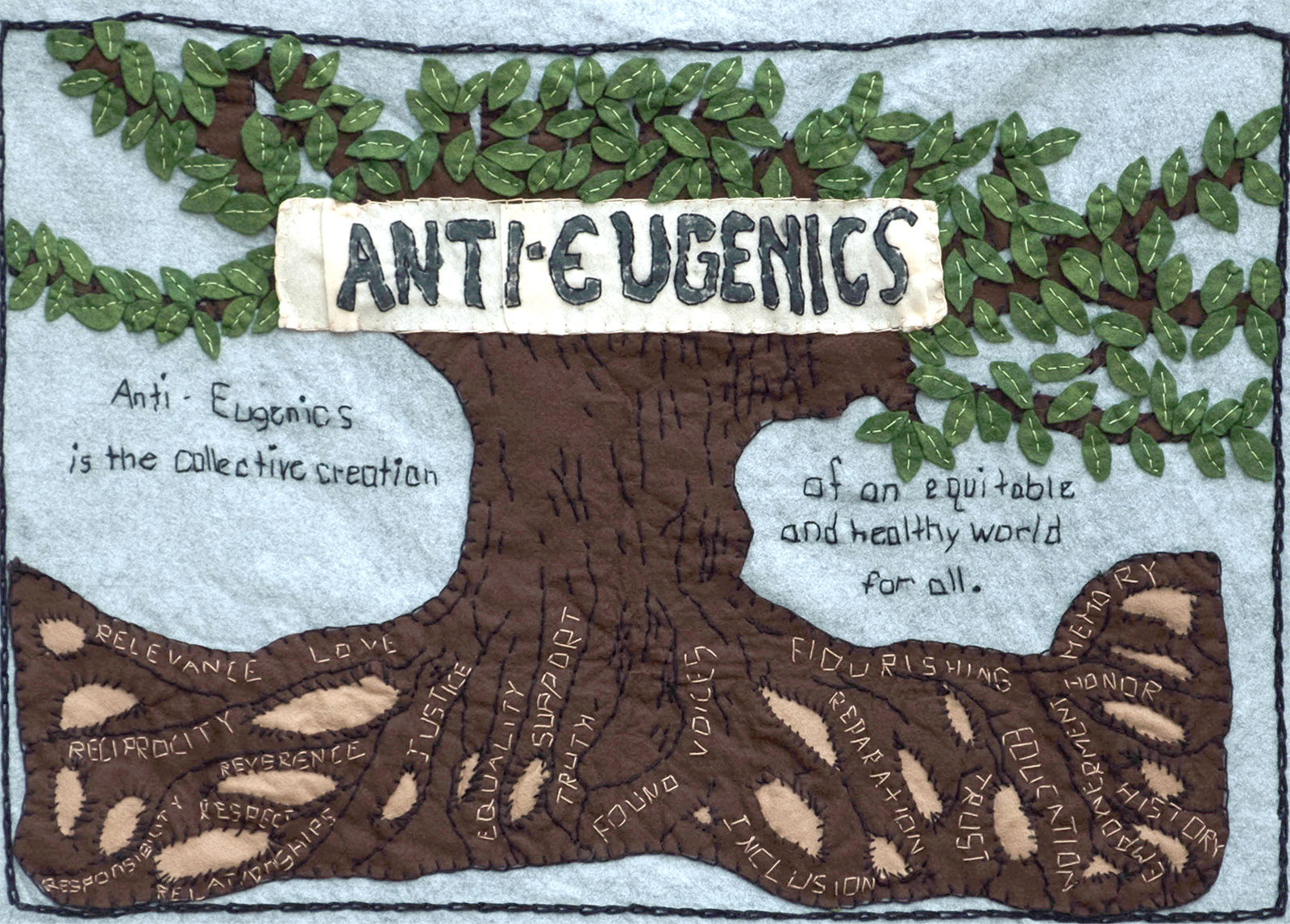
A large tree with strong roots, each representing a scientific discipline, is a classic image of eugenics. The accompanying note is clear: ‘Like a tree, eugenics draws its materials from many sources and organizes them into an harmonious entity.’
Join medical historian Marius Turda, as he explores the roots of the pseudoscience of eugenics. He will argue that the longevity of eugenics, is due not just to its promise of drawing together scientific and social theories, but also the credibility it was given by the scientific elite – notably Francis Galton in the 1860s and 1870s.
After the Holocaust, the tree was denuded of its branches, but its roots remained buried deep, embedded in our society, culture and politics. They continued to provide sustenance to various social, economic, and educational policies across the world. Marius will argue that the time has come to cut down this tree and remove its global roots. The personal and collective reckoning with the legacies of eugenics can then begin.
This event is organised in partnership with journalist Angela Saini and the ‘Challenging Pseudoscience’ group at the Royal Institution.
Listen to the recording here – https://pod.link/1573770758/episode/eb89f9eb44698ba55b2669113cfdab6f
A Cultural History of Race
Published by Bloomsbury Academic, Vols 1-6 of A Cultural History of Race, November 4. Edited by Marius Turda, Director of the Centre for Medical Humanities, Oxford Brookes University, UK
https://www.bloomsbury.com/uk/cultural-history-of-race-9781350067578/
A Cultural History of Race
How have definitions of race varied and changed over the past 2,500 years? What impact have religion, science and politics had on race, and our concept of it, throughout history?
61 experts, 60 chapters and over 1,700 pages explore the cultural evolution of race in relation to social, political and environmental thought from c. 500 BCE to the present day.